Computer vision evaluation
I contribute to a modular evaluation pipeline for image classification, semantic segmentation, and object detection, using shared protocols to compare pretrained models and adaptation strategies.
01 / Computer vision & digital health
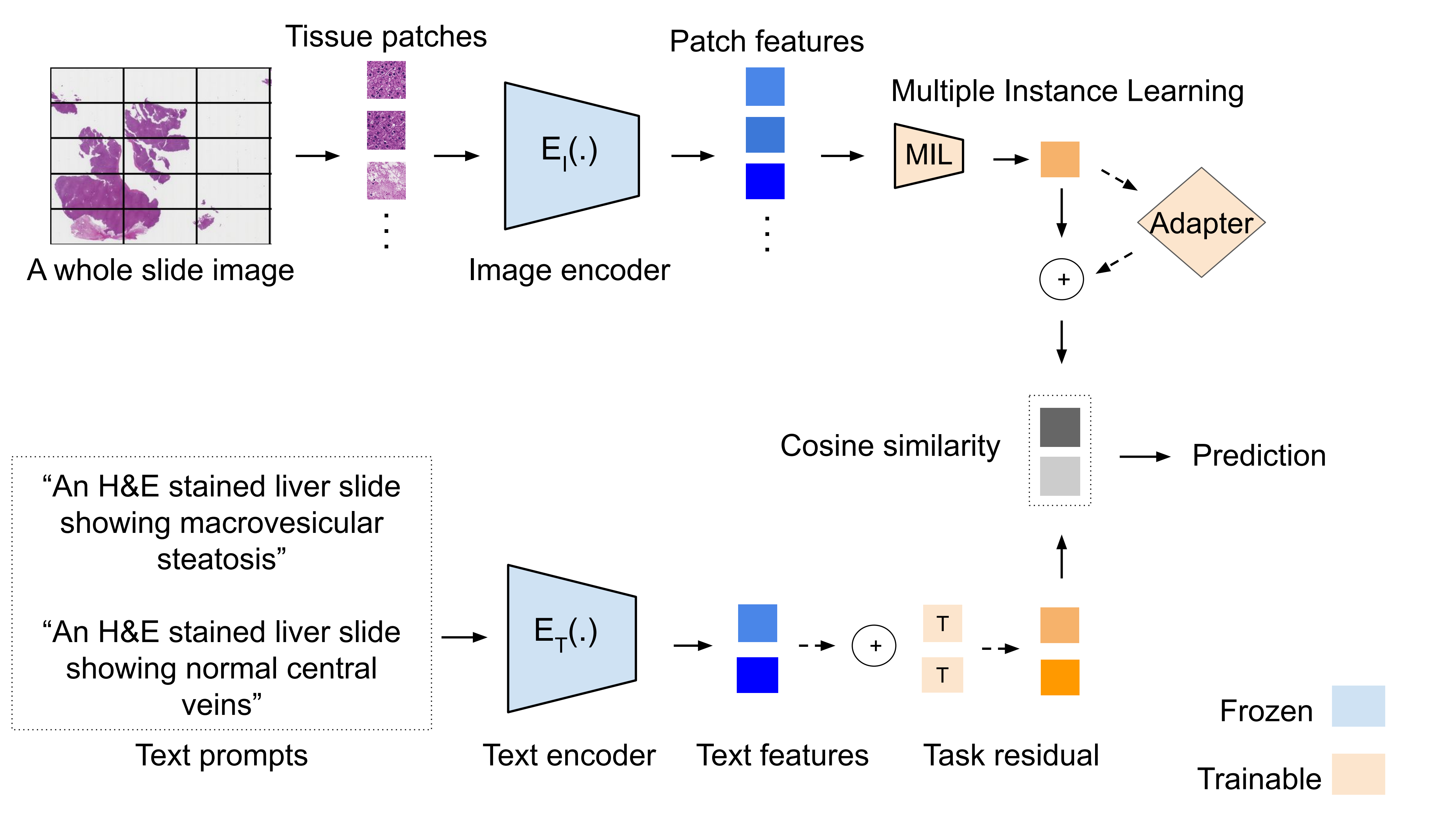
I evaluate a pretrained computational pathology vision-language model for predicting ethanol drinking status from nonhuman primate liver whole-slide images with few labeled examples, comparing visual adapters and textual task residuals with attention-based multiple instance learning. In four-shot experiments, visual adaptation achieved 78.1% mean balanced accuracy versus 43.5% for the ABMIL baseline, using subject-disjoint evaluation over 30 runs.
02 / Foundation-model adaptation
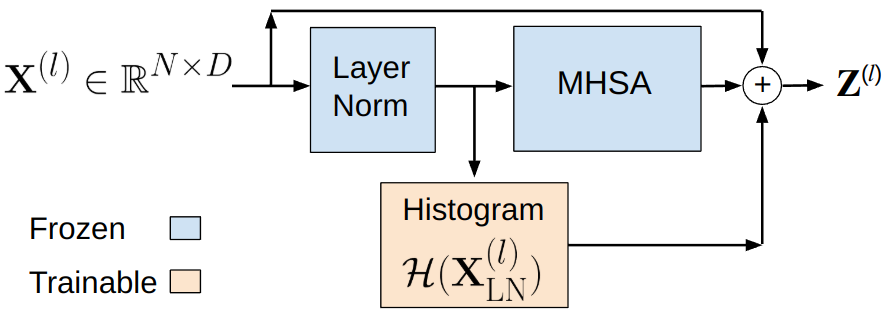
I developed and integrated a learnable histogram module into pretrained Transformers to capture target-domain feature distributions while keeping the backbone frozen. The method enables parameter-efficient adaptation for passive and active sonar classification, with comparisons of accuracy, trainable parameters, and feature representations. On VTUAD, it achieved 91.8% accuracy versus 89.8% for the conventional adapter baseline.
03 / Physiological time series
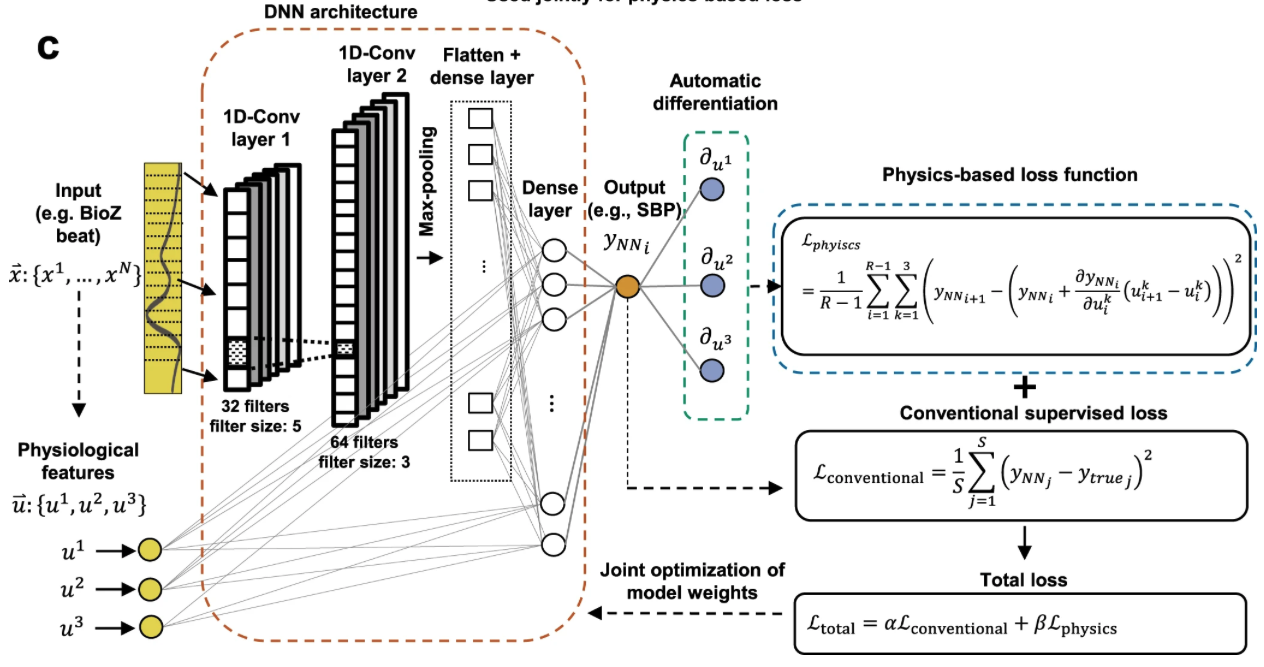
I co-developed physics-informed neural networks for cuffless blood-pressure estimation from physiological time series. The approach incorporates physiological relationships expressed through Taylor approximations into supervised training. The collaborative study reported an average 15 times reduction in ground truth training labels compared with the tested time-series baselines.
04 / Biomedical sensing
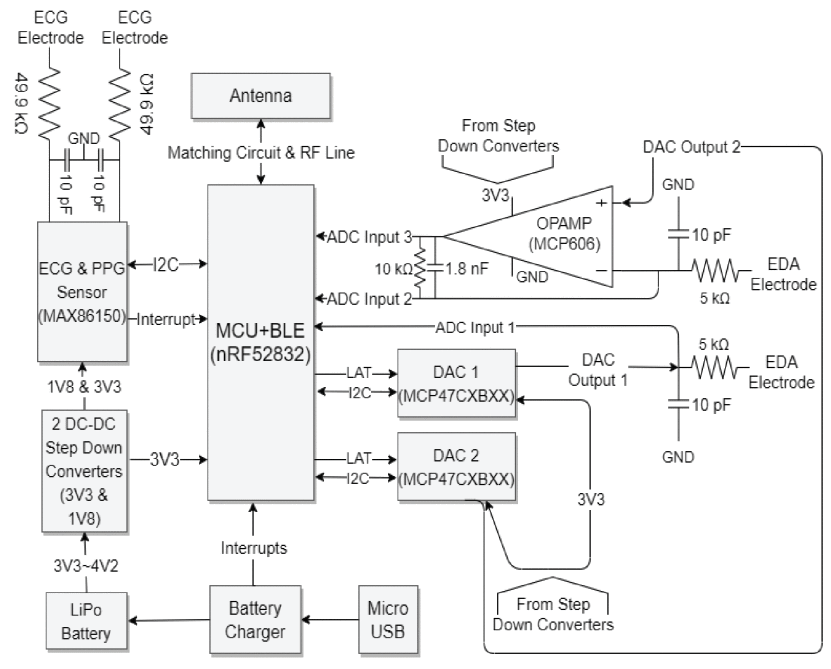
During my master’s research, I designed an ECG/EDA wearable stress-detection system, from its circuitry and Bluetooth Low Energy electronics to supervised learning algorithms. The 18-participant study achieved 94% classification accuracy and threefold battery life relative to the comparison devices.
Current projects
I contribute to a modular evaluation pipeline for image classification, semantic segmentation, and object detection, using shared protocols to compare pretrained models and adaptation strategies.
My dual-encoder work combines waveform and spectrogram representations through differentiable Choquet-integral fusion, learning how to combine complementary information for classification.
Read the preprint